 Book your Appointment

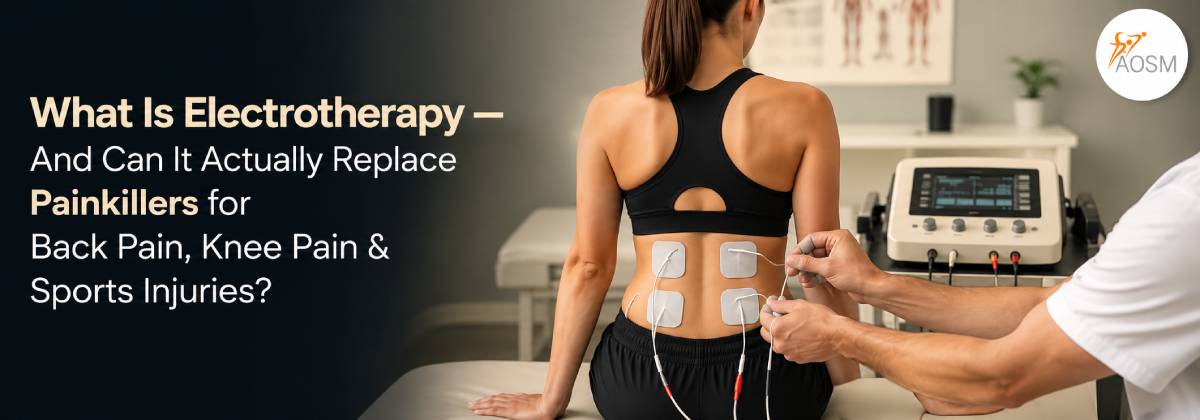
03 Jul, 2026 What Is Electrotherapy and Can It Actually Replace Painkillers for Back Pain, Knee Pain and Sports Injuries?
Here is a number that should make you stop and think. According to a 2023 report by the Indian Council of Medical Research (ICMR), over 63% of working adults in Delhi report chronic musculoskeletal pain, and nearly half of them are managing it with painkillers that their doctor never intended as a long-term solution. NSAIDs, muscle relaxants, and opioids taken daily. Month after month. Year after year.
The side effects are well documented: gastric ulcers, kidney stress, and dependency. And the underlying pain? Often still there.
What Is Electrotherapy? A Simple Explanation
Electrotherapy is the use of controlled electrical currents or sound waves to stimulate the body’s own healing mechanisms. It is not experimental. It is not painful. And it has been used in clinical physiotherapy settings worldwide for decades.
The concept sounds intimidating, but in practice, most patients describe the sensation as a mild tingling or gentle warmth. Some feel nothing at all during the session.
What is happening beneath the skin is far more interesting. Depending on the type of electrotherapy used, the electrical stimulation can:
- Block pain signals before they reach the brain
- Stimulate muscle contractions to prevent atrophy
- Increase local blood flow and accelerate tissue repair
- Reduce inflammation at a cellular level
- Trigger the release of endorphins, the body’s own natural painkillers
The key distinction from medication is this: electrotherapy works locally, at the site of pain, without systemic effects on your liver, kidneys, or gut.
Types of Electrotherapies Used in Physiotherapy
Not all electrotherapy is the same. A well-equipped physiotherapy clinic in South Delhi will typically offer multiple modalities, each suited to different conditions and stages of recovery. Here is a clear breakdown of what each one does.
TENS: Transcutaneous Electrical Nerve Stimulation
TENS is the most widely recognised form of electrotherapy. Small electrode pads are placed on the skin near the pain site. A gentle electrical current passes through, interrupting pain signals travelling along the nerves to the brain.
Best for: Chronic lower back pain, arthritis, post-surgical pain, and nerve-related pain
How it feels: A mild buzzing or tingling sensation
Session duration: 20 to 40 minutes
TENS does not heal tissue. It manages pain signals. Think of it as a more targeted alternative to an oral painkiller, working at the source rather than entering your bloodstream.
IFT: Interferential Therapy
IFT uses two medium-frequency electrical currents that intersect within the tissue, creating a low-frequency effect deep inside the muscle or joint. It penetrates deeper than TENS and is particularly effective for inflammation and muscle spasm.
Best for: Knee joint pain, shoulder impingement, post-fracture rehabilitation, and sports injuries
How it feels: A deep, rhythmic pulsing sensation
Session duration: 15 to 30 minutes
Ultrasound Therapy
Ultrasound therapy in physiotherapy uses high-frequency sound waves, not imaging ultrasound, to create micro-vibrations within soft tissue. This produces what physiotherapists call a deep heating effect, increasing the flexibility of collagen in tendons and ligaments and speeding up cellular repair.
Best for: Tendonitis, frozen shoulder, plantar fasciitis, ligament injuries, and scar tissue breakdown
How it feels: Mild warmth, and sometimes nothing at all
Session duration: 5 to 10 minutes per site
Ultrasound therapy physiotherapy in Delhi has become one of the most requested modalities among athletes and fitness-active patients because it addresses soft tissue injuries that painkillers simply cannot reach.
SWD: Short Wave Diathermy
SWD uses high-frequency electromagnetic energy to generate deep heat within joints and the surrounding tissue. It is commonly used for chronic joint conditions and during the subacute phase of injury recovery.
Best for: Osteoarthritis, hip pain, and deep joint inflammation
Session duration: 15 to 20 minutes
EMS: Electrical Muscle Stimulation
EMS sends electrical impulses directly to motor nerves, triggering muscle contractions. It is used both to strengthen weakened muscles and to prevent atrophy in patients who cannot exercise due to injury or post-surgical immobilisation.
Best for: Quadriceps weakness after knee surgery, shoulder rehabilitation, and post-fracture muscle recovery
LLLT: Low-Level Laser Therapy
Low-level laser therapy uses specific light wavelengths to stimulate tissue repair at a mitochondrial level, essentially giving cells the energy to heal faster. It is entirely painless and non-thermal.
Best for: Wound healing, nerve pain, joint inflammation, and sports injuries
Session duration: 5 to 15 minutes
Electrotherapy for Sports Injuries: What Athletes Need to Know
Whether you are a competitive athlete, a weekend runner, or someone who trained a little too hard at the gym, sports injuries involve specific tissues such as ligaments, tendons, muscle bellies, and fascia that respond well to electrotherapy.
Ultrasound therapy is particularly effective for soft tissue injuries because it accelerates the proliferation phase of healing, the phase where the body lays down new collagen. Done correctly, this means a partial ligament tear or tendinopathy that might take 10 to 12 weeks to heal conservatively can recover meaningfully faster with a structured ultrasound and IFT protocol.
Common sports injuries treated with electrotherapy include:
- Hamstring and quadriceps strains
- Ankle ligament sprains (Grade I and II)
- Rotator cuff tendinopathy
- Iliotibial band syndrome, also known as runner’s knee
- Shin splints
- Tennis elbow and golfer’s elbow
- Plantar fasciitis
For athletes specifically, the goal is not just pain relief. It is restoring tissue quality and neuromuscular function, so the injury does not recur. Electrotherapy is one piece of that rehabilitation puzzle.
Who Should Consider Electrotherapy?
Electrotherapy is appropriate for a wide range of patients. You may be a good candidate if:
- You have been managing pain with NSAIDs or muscle relaxants for more than four weeks
- You have a chronic musculoskeletal condition such as back pain, arthritis, or frozen shoulder
- You are recovering from a sports injury or a post-surgical procedure
- You want a non-surgical, drug-free treatment option
- You have been told there is nothing more that can be done outside of surgery
- You are looking to reduce your medication dosage under medical supervision
Electrotherapy is generally not recommended for patients who are pregnant (over the abdomen or lower back), have an active pacemaker, have malignant tissue in the treatment area, or have open wounds at the electrode placement site. A qualified physiotherapist will conduct a safety screening before any session begins.
Why Choose AOSM for Electrotherapy in Safdarjung, New Delhi
A+ Orthopaedics and Sports Medicine Centre (AOSM), located in Safdarjung, New Delhi, is a specialist orthopaedic and sports medicine clinic that integrates advanced physiotherapy, including a full range of electrotherapy modalities, with orthopaedic diagnosis and management.
What makes the approach at AOSM different is the starting point: an accurate diagnosis. Electrotherapy administered without understanding the specific tissue pathology is guesswork. At AOSM, every physiotherapy protocol is designed in conjunction with orthopaedic assessment, so the right modality is used for the right condition at the right stage of recovery.
Patients from across South Delhi, including Safdarjung, Hauz Khas, Malviya Nagar, Green Park, and SDA, visit AOSM for conditions ranging from chronic back pain and knee osteoarthritis to acute sports injuries and post-surgical rehabilitation.
10 Frequently Asked Questions About Electrotherapy
1. Is electrotherapy painful?
No. Most patients describe the sensation as a mild tingling, buzzing, or gentle warmth. Some feel very little at all. The intensity is always adjusted to patient comfort. There is no push-through-the-pain element in electrotherapy.
2. How many sessions of electrotherapy do I need to see results?
This varies by condition and severity. For acute injuries, meaningful improvement is often felt within three to five sessions. For chronic conditions such as long-standing back pain or knee osteoarthritis, a typical protocol runs 10 to 15 sessions over four to six weeks, with reassessment at intervals. Your physiotherapist will set realistic expectations based on your specific diagnosis.
3. Can electrotherapy permanently cure my back pain?
Electrotherapy is a treatment modality, not a standalone cure. For many patients with chronic back pain caused by muscle imbalance, nerve sensitisation, or soft tissue dysfunction, a structured course of electrotherapy combined with exercise therapy and posture correction produces lasting relief. For pain caused by structural problems such as disc herniation or spondylosis, it provides significant symptomatic relief and functional improvement, but the underlying condition may require additional management.
4. Is electrotherapy safe for elderly patients?
Yes, for most elderly patients. Electrotherapy is one of the preferred treatment options for older adults with arthritis or chronic joint pain, precisely because it avoids the systemic side effects of long-term NSAID use, which carries risks for patients with kidney or gastrointestinal concerns. A pre-treatment screening is conducted to rule out contraindications such as pacemakers.
5. Can I do electrotherapy while still taking my medications?
Yes. In most cases, electrotherapy is introduced alongside existing medication, with the goal of gradually reducing pharmaceutical dependence as pain improves. You should never stop prescribed medication without consulting your doctor. The goal is a managed reduction under medical supervision, not an abrupt switch.
6. Is electrotherapy effective for nerve pain such as sciatica?
Yes. TENS is well-studied for nerve-related pain including sciatica, cervical radiculopathy, and peripheral neuropathy. It works by modulating pain signals at the nerve level, essentially reducing the intensity of the pain signal before it reaches the brain. It does not repair the nerve, but it provides meaningful relief while the underlying cause is addressed.
7. Where can I get electrotherapy treatment near Safdarjung in South Delhi?
A+ Orthopaedics and Sports Medicine Centre (AOSM) in Safdarjung, New Delhi offers comprehensive electrotherapy physiotherapy services, including TENS, IFT, ultrasound therapy, SWD, EMS, and laser therapy, as part of an integrated orthopaedic and sports medicine practice. You can book a consultation and learn more at www.aosm.in.
8. How does electrotherapy compare to physiotherapy exercises?
They are not competing approaches; they are complementary. Electrotherapy is most effective when combined with structured exercise rehabilitation. Electrotherapy reduces pain and inflammation, which allows patients to engage more fully and comfortably with exercise therapy. A good physiotherapy programme at AOSM will incorporate both.
9. Can electrotherapy help with post-surgical knee pain?
Yes. Post-surgical electrotherapy, particularly EMS and TENS, plays an important role in restoring muscle function, managing swelling, and reducing pain after procedures such as ACL reconstruction, knee replacement, or meniscus repair. It is a standard part of the rehabilitation protocol at AOSM for post-operative patients.
10. Is electrotherapy covered under health insurance in India?
Coverage varies by insurer and policy. Some health insurance plans in India do cover physiotherapy sessions, including electrotherapy, particularly when prescribed as part of a post-surgical or post-hospitalisation rehabilitation programme. It is advisable to check with your insurance provider directly. The team at AOSM can assist with documentation if required.
Ready to Move Without Pain?
AOSM (A+ Orthopaedics and Sports Medicine Centre), Safdarjung, New Delhi offers expert electrotherapy physiotherapy under orthopaedic supervision. Whether you are dealing with chronic back pain, a persistent knee problem, or a sports injury that has not fully healed, the team at AOSM will build a treatment plan grounded in accurate diagnosis, not guesswork.
Phone: +91 99103 02876
Website: www.aosm.in
Easily accessible from Hauz Khas, Malviya Nagar, Greater Kailash, Green Park, and SDA, right in the heart of South Delhi.


