 Book your Appointment

15 Oct, 2026 Knee Instability: Why Does Your Knee Feel Like It Might Give Way?
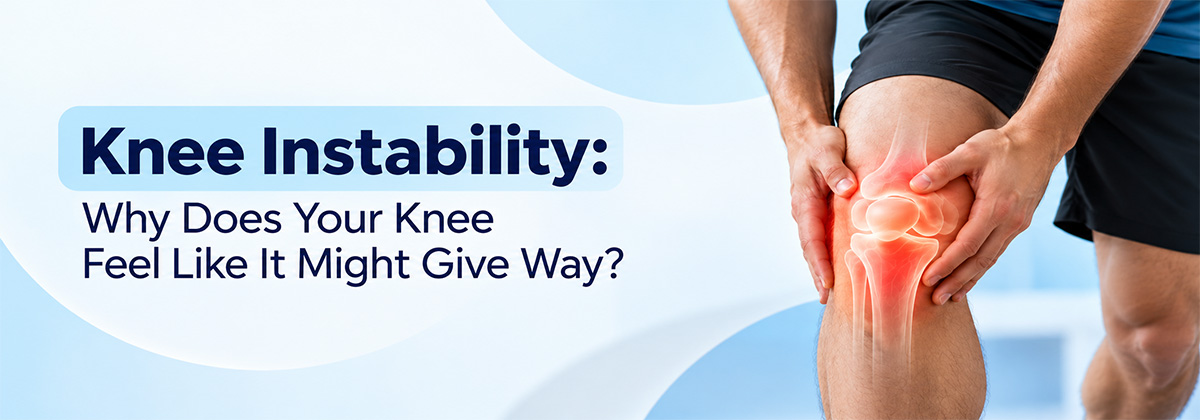
Have you ever felt like your knee might suddenly give way while walking, climbing stairs, standing up, or playing a sport? This feeling is known as knee instability and should not always be ignored.
Knee instability can affect your confidence while walking or putting weight on your leg. It may occur because of a previous injury, ligament damage, muscle weakness, meniscus problems, or certain knee conditions. Understanding the possible causes can help you seek appropriate treatment at the right time.
What Is Knee Instability?
Knee instability is a sensation that your knee may buckle, shift, or give way during movement or weight-bearing activities.
The knee depends on ligaments, muscles, tendons, cartilage, and bones to maintain stability. When one or more of these structures are injured or weakened, the knee may feel unstable.
Some people experience instability occasionally, while others notice it repeatedly while walking, running, changing direction, or exercising.
Why Does Your Knee Feel Like It Might Give Way?
1. Ligament Injuries
Ligaments help control knee movement and provide stability. Injuries to the ACL, PCL, MCL, or LCL can affect how stable your knee feels.
An ACL injury may cause the knee to give way, particularly during pivoting, jumping, landing, or sudden changes in direction. This is common in sports involving rapid movements.
2. Muscle Weakness
Weak muscles around the knee and hip can also contribute to knee instability.
The quadriceps, hamstrings, and hip muscles help control knee movement. When these muscles are weak, the knee may have less support during activities such as walking, climbing stairs, or squatting.
In suitable cases, physiotherapy for knee instability can help improve muscle strength and movement control.
3. Meniscus Injury
The meniscus acts as a cushion between the thighbone and shinbone. A meniscus tear can cause pain, swelling, clicking, catching, or difficulty during certain movements.
Some people may also experience a feeling of instability, particularly while twisting or putting weight on the affected knee.
4. Previous Knee Injury
A previous knee injury can continue to affect stability even after the initial pain has improved.
If rehabilitation was incomplete, muscle weakness, reduced coordination, or limited mobility may remain. Proper knee rehabilitation can help restore strength, movement, and functional control.
5. Arthritis and Degenerative Changes
Certain forms of knee arthritis can cause pain, stiffness, swelling, and changes in joint function. These symptoms may make the knee feel less stable during walking or prolonged standing.
Treatment depends on the severity and may include physiotherapy, exercise, activity modification, medication, or other appropriate options.
When Should You See an Orthopaedic Specialist?
Repeated episodes of knee giving way should not be ignored, particularly when they follow an injury.
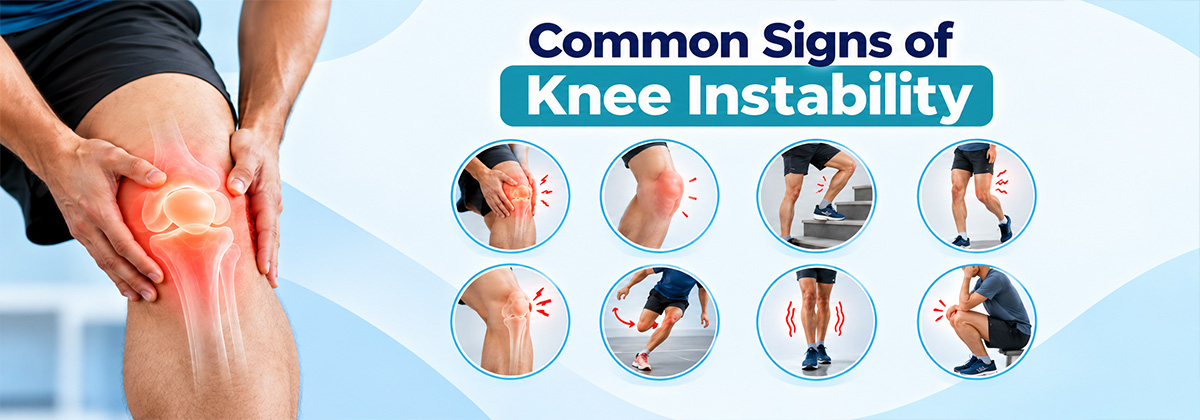
Consider professional assessment if:
- Your knee repeatedly buckles
- Instability began after an injury or fall
- You have significant swelling
- You have difficulty putting weight on the leg
- Your knee locks or catches
- Pain or instability is worsening
- You cannot return to normal activities
An orthopaedic assessment can help identify whether the problem involves a ligament, meniscus, muscle, joint, or another structure.
How Is Knee Instability Treated?
Treatment for an unstable knee depends on the underlying cause, severity, activity level, and individual needs.
Physiotherapy and Rehabilitation
For suitable patients, physiotherapy can improve muscle strength, flexibility, balance, coordination, and knee control.
A rehabilitation programme may include:
- Quadriceps and hamstring strengthening
- Hip and core strengthening
- Balance exercises
- Mobility exercises
- Proprioception training
- Functional movement exercises
The aim is to improve the knee’s ability to handle daily and sport-specific activities.
Bracing and Activity Modification
In certain cases, a knee brace may provide additional support during specific activities.
Temporarily modifying activities that increase pain or instability may also help while the knee is recovering.
Surgical Treatment
Not every case of knee instability requires surgery. However, significant ligament injuries, recurrent instability, or certain structural problems may require surgical treatment.
For selected patients with an ACL injury, ACL reconstruction may be considered based on factors such as instability, activity level, sports participation, and overall knee condition.
The decision should be made after appropriate clinical assessment.
Frequently Asked Questions
1. Why does my knee suddenly give way?
A knee may give way due to ligament injury, muscle weakness, meniscus problems, arthritis, or other structural issues. An assessment can help identify the exact cause.
2. Is knee instability always a sign of an ACL tear?
No. Although an ACL injury can cause instability, similar symptoms may occur with muscle weakness, meniscus injuries, arthritis, or other ligament problems.
3. Can knee instability be treated without surgery?
In some cases, yes. Physiotherapy, strengthening exercises, activity modification, and other non-surgical treatments may improve stability depending on the cause and severity.
4. When should I see a doctor for knee instability?
Seek an assessment if your knee repeatedly gives way, particularly after an injury, or if you have significant pain, swelling, locking, or difficulty putting weight on the leg.
Conclusion
Knee instability can result from ligament injuries, muscle weakness, meniscus problems, arthritis, or other knee conditions. While the feeling of your knee giving way should not be ignored, treatment depends on the underlying cause.
For suitable patients, physiotherapy and knee rehabilitation may improve strength, balance, movement control, and confidence. Some cases may require additional or surgical treatment.
If your knee repeatedly feels unstable during daily activities or sports, an appropriate orthopaedic assessment can help identify the cause and determine the right treatment approach.
Not sure why your knee feels unstable?
Schedule an orthopaedic and physiotherapy consultation with AOSM to understand your symptoms and explore appropriate treatment options.


